Bruce Ackerman
The Wisdom of CrowdsBruce Ackerman is identified as a Yale law professor who, with political scientist James Fishkin, proposed Deliberation Day: a national holiday two weeks before major elections when voters would meet in small and large groups to discuss the campaign’s central issues. In the book, Ackerman’s proposal gives institutional form to a larger question: whether ordinary citizens can make more informed political choices when they deliberate together, and what it would take to make such participation a meaningful part of democracy.
The Deliberation Day Proposal
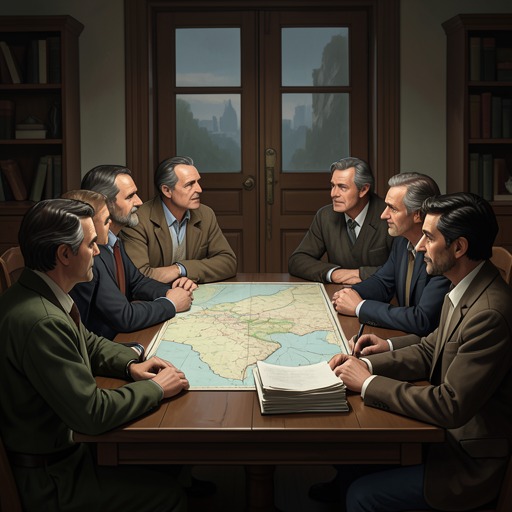
Ackerman and Fishkin envisioned gatherings at two scales. Groups of fifteen would meet in their neighborhoods, alongside larger assemblies of five hundred, so that voters could discuss the major issues at stake in the coming election. The day would take place two weeks before a major national election. Participants who attended and then voted the following week would receive $150. The payment was part of a concrete design for encouraging participation, not simply an appeal to civic spirit.
The proposal grew out of a concern about the state of American democracy. Ackerman and Fishkin argued that Americans were becoming isolated from one another and alienated from political life, while public debate was growing coarser and less informative. In their account, private interest was eclipsing the idea of a public good. Deliberation Day was meant to give citizens a forum in which they could express their views and learn about the questions facing the country before casting a ballot.
Deliberation and Public Judgment
The book places Ackerman’s proposal alongside Fishkin’s deliberative polling, which was designed to address the limits of traditional polling. The underlying claim is that political debate need not be confined to experts and policy elites: with adequate information and a chance to talk matters through with peers, ordinary people can understand complex issues and make meaningful choices. Ackerman’s collaboration with Fishkin carries that claim from a polling method into a proposed national civic institution.
This argument also connects with the book’s account of collective judgment. It describes crowds as more likely to reach sound decisions when their members bring diverse perspectives, make independent judgments, and have a way to combine them. Those conditions do not guarantee wisdom; collective estimates still need information to work with. Deliberation Day addresses a related political problem by proposing a structured opportunity for citizens to encounter issues and one another before deciding. The book does not claim that the proposal would automatically produce agreement or a correct definition of the common good.
Practical and Civic Objections
The proposal is presented as ambitious and difficult to implement. Deliberative polling itself is time-consuming and expensive, making it hard to imagine as a routine feature of American politics; a nationwide deliberation holiday would pose an even larger practical challenge. The book also notes the possibility that politicians may not want voters to be well informed, a concern that highlights the distance between designing a civic forum and securing the political will to use it.
Deliberative democracy also attracts doubts about citizens’ willingness and capacity to take part. Critics may see the model as resting on an unrealistic expectation of civic-mindedness, assigning almost magical power to discussion, or carrying a schoolroom-like insistence that people devote time to politics. Richard Posner, cited in the discussion, argues that citizens have little appetite or time for extended political reasoning and that judging what is good for society is harder than pursuing self-interest. The contrast leaves Ackerman and Fishkin’s proposal open to challenge without reducing it to a claim that discussion alone resolves disagreement.
Significance in the Book
Ackerman’s role is tied to a proposal rather than to a personal or narrative arc: the evidence identifies him as Fishkin’s collaborator in advancing Deliberation Day, but supplies no further biography or account of his actions. His significance lies in the scale and structure of the idea. Instead of treating voters only as subjects of polls or leaving political judgment to elites, the proposal would set aside a national day for citizens to learn, speak, and deliberate before voting.
The book presents that ambition in tension with its costs and with doubts about public participation. Deliberation Day is therefore both a practical institutional plan—with a date in the electoral cycle, group sizes, and a participation payment—and a test of faith in citizens’ capacity to govern themselves. Its place in the wider argument is not that democracy becomes wise merely by assembling people, but that the quality of collective judgment depends on the conditions under which people form and exchange their views.